
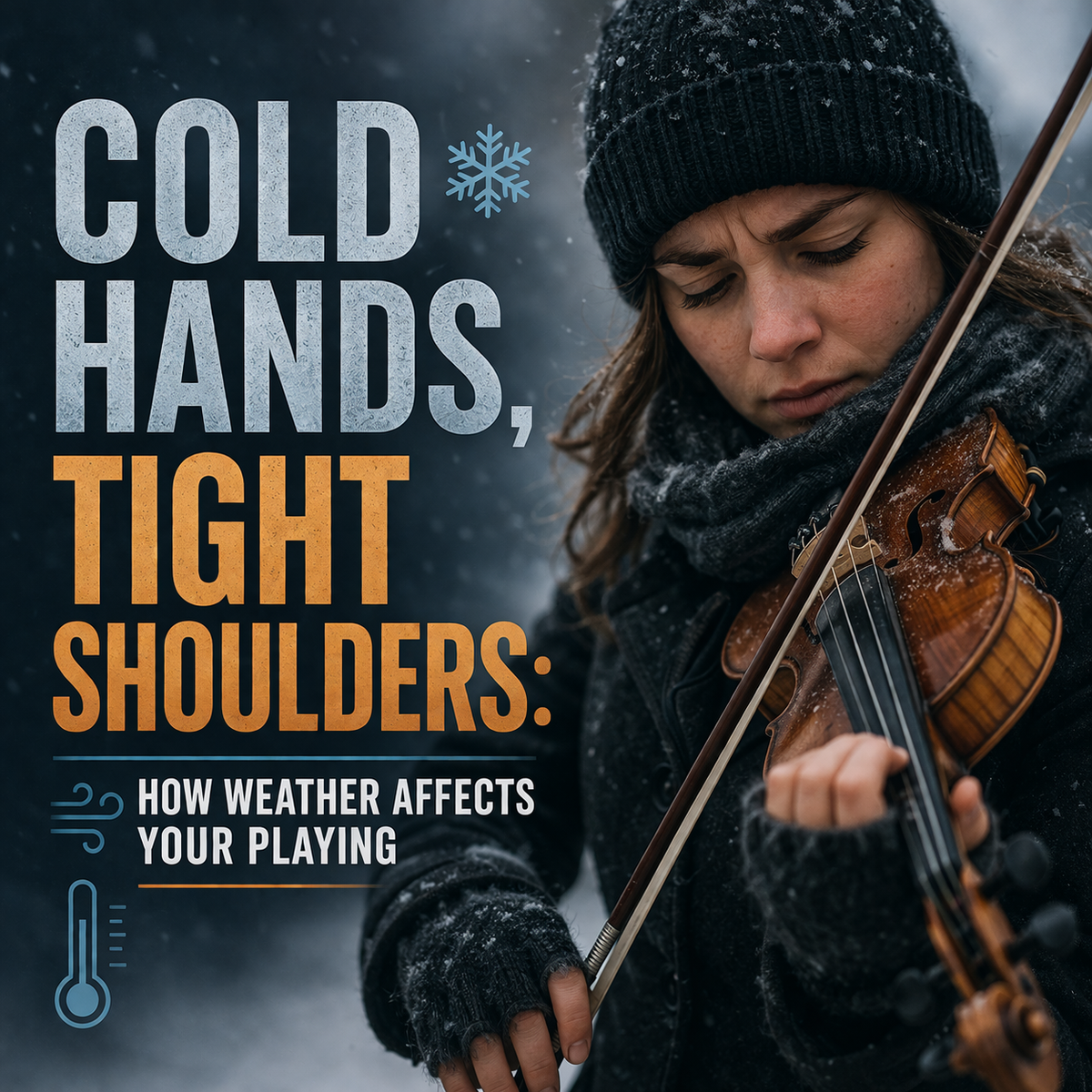
Some practice sessions feel smooth and controlled. Others feel stiff, tense, and harder than usual — even when you’re playing the same material.
If this happens more often during colder days, the weather may be playing a bigger role than you think.
For violinists and fiddlers, temperature doesn’t just affect the instrument — it affects the body too.
Cold Muscles Don’t Move as Freely
When your body is cold, your muscles naturally tighten. This can make:
- Finger movements feel slower
- Shifting less accurate
- Bow control more rigid
Even simple passages can feel more difficult when your hands aren’t fully warmed up.
Tension Builds Up Quickly
Cold conditions don’t just slow you down — they can also create tension without you realizing it.
You might notice:
- Raised shoulders
- A tighter grip on the bow
- Less relaxed posture overall
Over time, this tension can affect both comfort and sound quality.
Your Sound Can Change Too
When your body feels stiff, your playing often reflects it.
Tone may sound:
- Less full
- Less controlled
- Slightly forced
This isn’t a technique issue — it’s often just your body reacting to the temperature.
Warming Up Before Playing Matters

Before jumping into scales or pieces, take a few minutes to warm up physically.
Simple things can help:
- Rubbing your hands together
- Stretching your fingers and shoulders
- Holding a warm drink for a few minutes
These small steps can improve flexibility and make your playing feel more natural.
Even something as simple as holding a warm drink can help — many players like to keep a cozy mug nearby, like our I just want to drink tea and play my fiddle mug, to stay relaxed and comfortable between sessions.
Keep Your Practice Space Comfortable
Your environment makes a big difference.
If possible:
- Practice in a room that isn’t too cold
- Avoid direct drafts or strong air from vents
- Take short breaks to reset if you start feeling tense
A comfortable space helps your body stay relaxed and responsive.
Final Thought
Not every difficult practice session is about technique. Sometimes, it’s simply your body reacting to the conditions around you.
Learning to recognize that — and making small adjustments — can help you stay more comfortable, focused, and consistent, even during colder days.
And often, that’s all you need to get back into the flow. 🎻


